Restorative Living
A quieter way of living.
We believe a home should offer a sense of calm that is increasingly hard to find anywhere else: a place where the pace of everyday life begins to soften. Restorative living is how we build toward it, in the parts of a house you see and, mostly, in the parts you don’t.
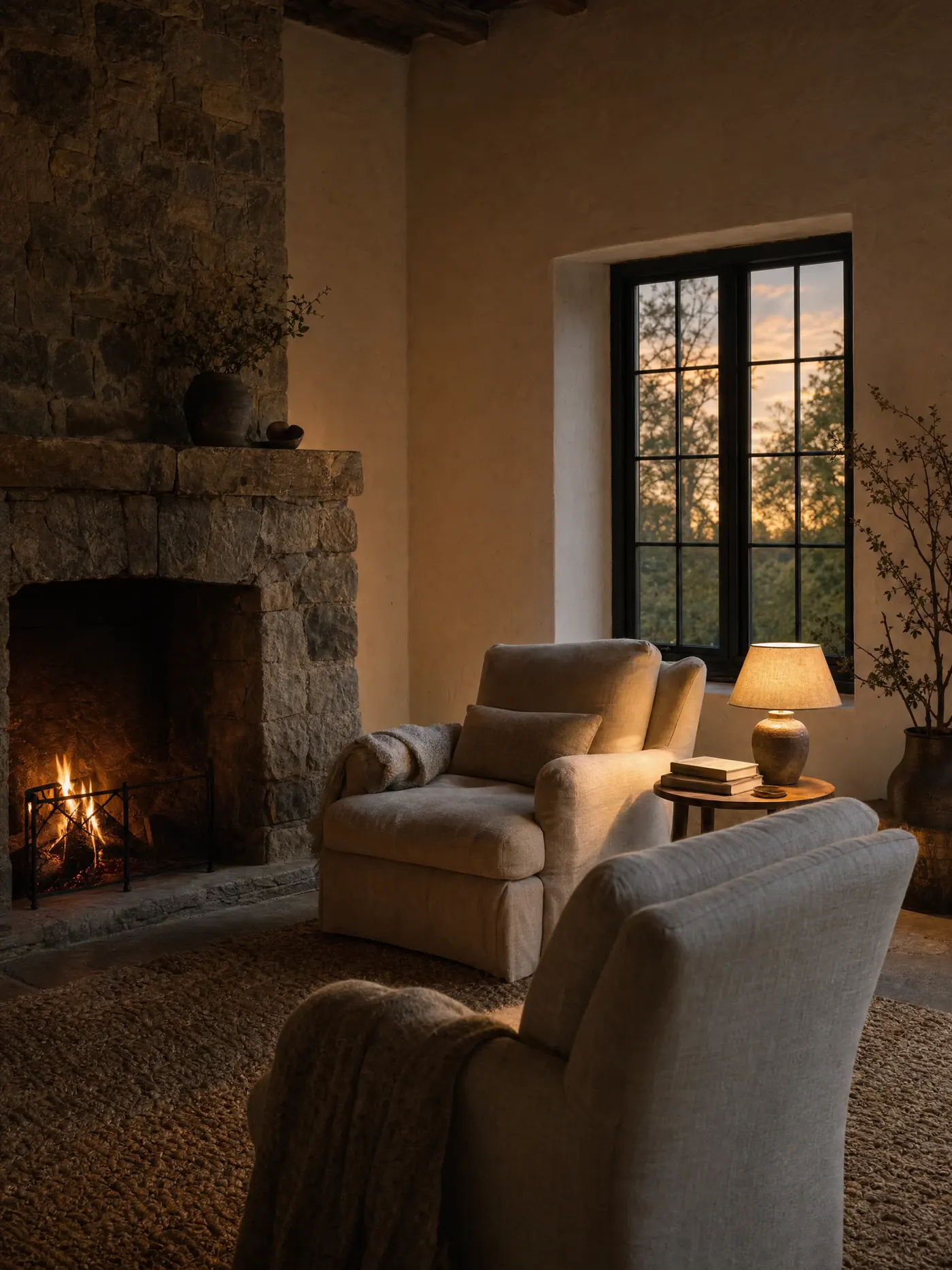
A house that supports how you live in it
Every house affects the people inside it: through the air they breathe, the light they wake to, the quiet they sleep in, and the materials they live closest to. Most of those effects are left to chance, or to the cheapest option. Restorative living means deciding them on purpose, from the first drawing.
Some call this building biology. Others call it a biohacked home. We think of it as the way a good house should have been built all along, and we build it into homes with the character of old ones, so the care shows in how the house feels rather than in how it looks.
What goes into an Abode home
Decided on purpose
- Insulation
Sheep’s wool
In place of fiberglass and spray foam, we insulate with natural sheep’s wool. It takes on and gives back moisture as the humidity changes without losing its warmth, resists fire on its own, and quiets sound between rooms.
- Networking
Wired, not wireless
Ethernet runs to every room, so the house doesn’t depend on Wi-Fi. Connections are faster and more private, and wireless becomes a choice you make room by room rather than a signal that fills the house by default.
- Electrical
Commercial-grade, by design
We use electrical equipment and wiring of the grade normally reserved for commercial buildings, chosen to reduce the electromagnetic fields in the rooms where you live and sleep.
- Materials
Stone and slate over wood
Slate and stone take the place of wood wherever we can. They give moisture and mold far less to work with, and they age into the house instead of wearing out of it.
- Air
Low-emission finishes
Low-emission finishes, attention to indoor air quality, and careful moisture management, considered as part of construction rather than added once the walls are closed.
- Light
Following the day
Windows placed to bring daylight where you spend your mornings, and warm, low light for the evening, so the house follows the rhythm of the day instead of working against it.
- Quiet
Acoustic comfort
Rooms and floors detailed for quiet, and modern conveniences integrated out of sight, so the character of the house always comes first.
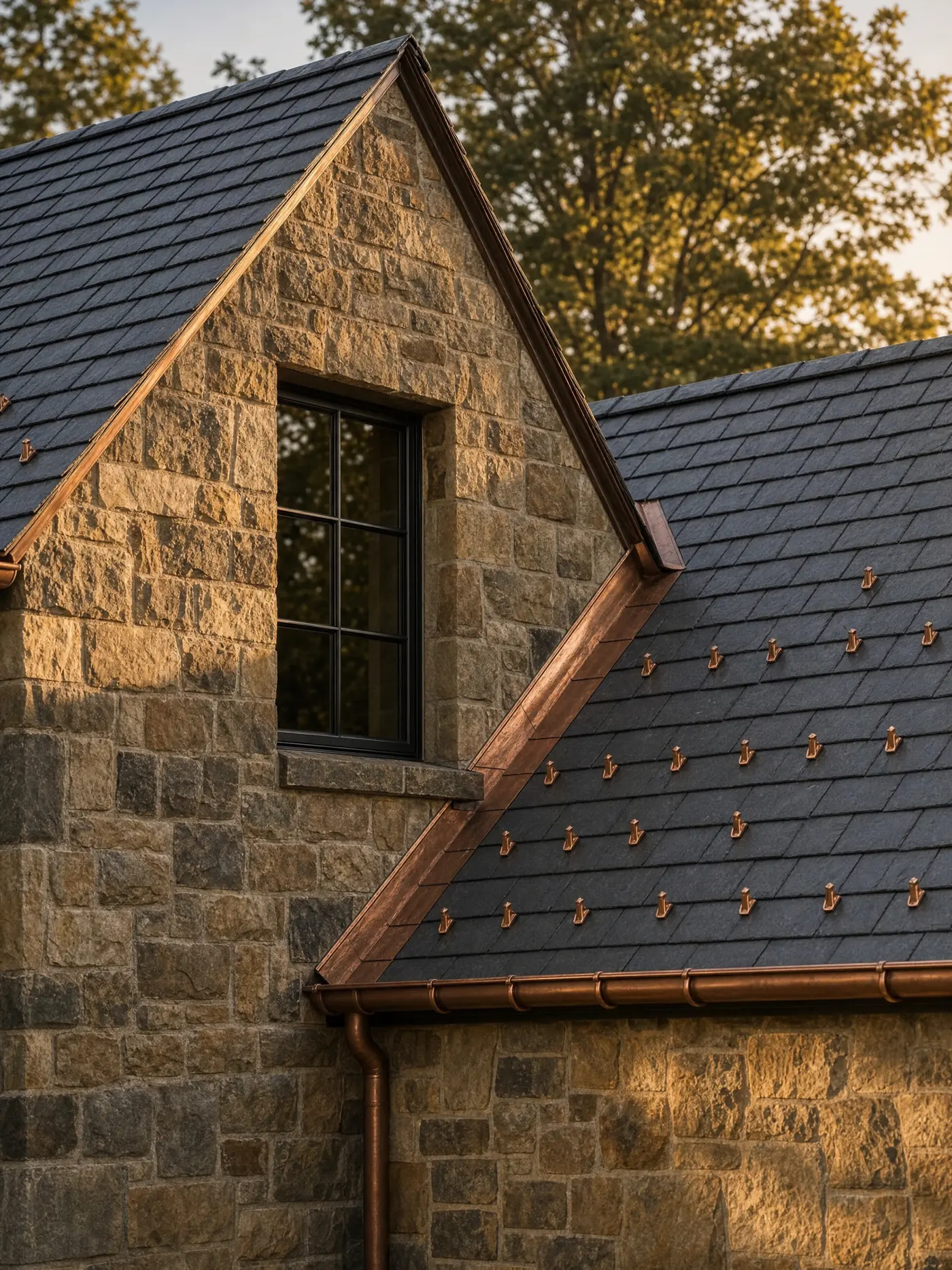
Restorative living is not an addition to our architecture. It is part of the thinking behind it.
The Founding Residence
Built this way, from the first home
Our first home, the Founding Residence, is built to every standard on this page: stone and slate, copper, wool in the walls, a wired network, and commercial-grade electrical throughout. It is under construction now.
For those who have done the research
Many of the people who find us have already spent years reading and listening: about sleep, about light, about what’s in the air and the walls around them. They don’t need persuading. They need someone who will build it properly, and make it beautiful enough to live in for the rest of their lives.
If you already own a home, or you’re building with someone else, we consult as well: on insulation, wiring and networks, materials, and the decisions that are expensive to change later. To see how a commission unfolds from the first conversation, read about our process.